


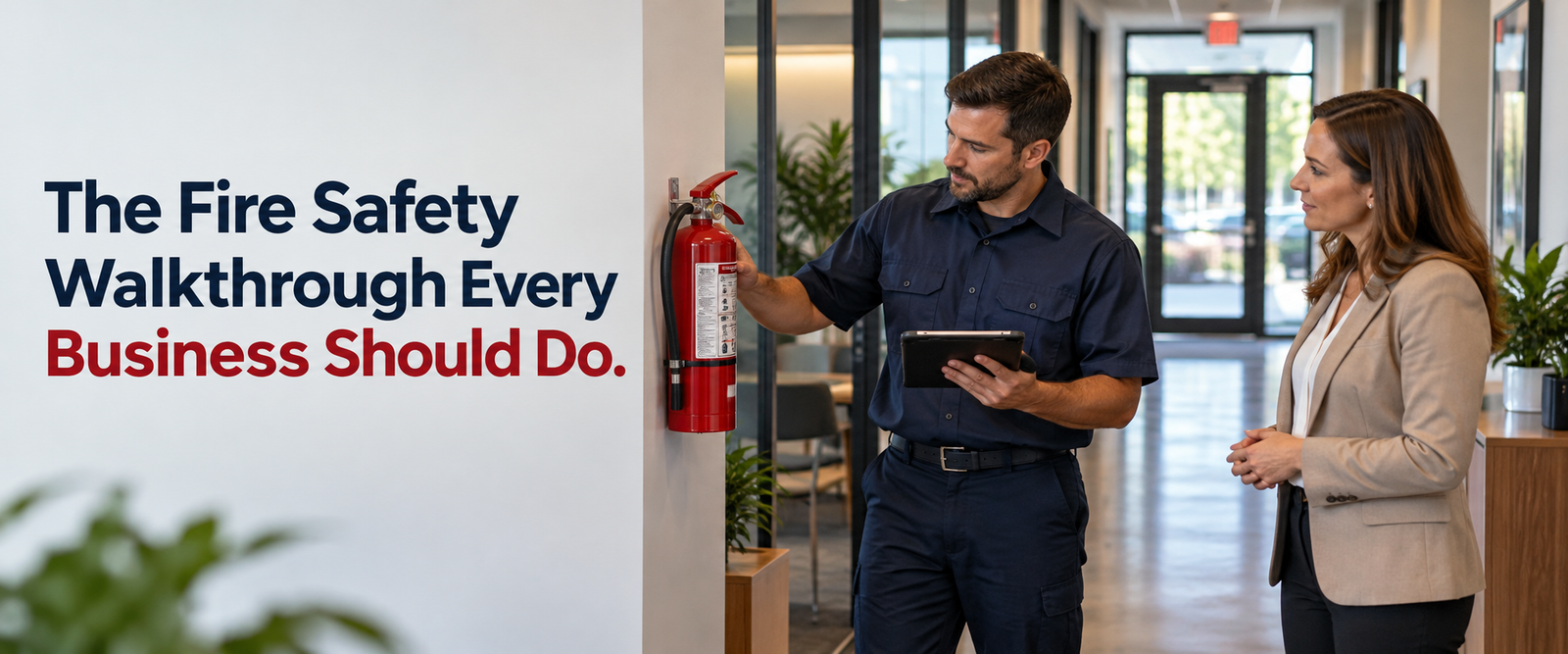
A business fire safety walk through helps you spot everyday risks, check that safety equipment is accessible, and make sure people know what to do in an emergency. The idea behind Grace Under Fire is calm, prepared action under pressure—and that starts well before an alarm sounds.
A regular walk through gives business owners and managers a practical way to notice blocked exits, misplaced extinguishers, changing hazards, and gaps in staff understanding. It supports fire safety, but it does not replace a required inspection, a fire code review, or a site-specific emergency plan.
Key takeaways
- Walk the entire workplace, including storage and back-of-house areas.
- Check that exits, alarms, and extinguishers are visible and accessible.
- Ask employees how they would respond; don’t assume everyone knows.
- Record issues, assign responsibility, and confirm that corrections are complete.
Grace Under Fire Starts Before an Emergency
Grace Under Fire means staying composed and making informed decisions when conditions become stressful. In a business, that composure is built through preparation: people know the exits, equipment is kept accessible, and responsibilities are clear.
A fire safety walk through is a planned look around your workplace to identify visible hazards and readiness gaps. It is not the same as a licensed fire extinguisher inspection or a formal code assessment. Think of it as a practical way to notice concerns early and decide what needs follow-up.
For example, a floor plan may show an exit route that looks clear, while a delivery cart regularly blocks the corridor during busy hours. A walk through at the right time of day can reveal that real-world problem. It can also show whether staff can find an extinguisher without searching behind stock or furniture.
Grace Under Fire provides fire extinguisher inspection, installation, service, replacement, documentation, and education for North Texas businesses. Its services also include applied awareness walk through s to help businesses review their spaces and fire safety readiness.
Walk the Site With a Calm, Repeatable Route
A consistent route helps you check the whole workplace instead of only the areas you see every day. Start outside, then move through each floor and work area in the same direction. Include customer spaces, offices, kitchens, stockrooms, loading areas, mechanical rooms, and any less-used rooms that staff may need to access.
Set aside enough time to look carefully. A rushed pass while answering calls is unlikely to catch a storage issue or a door that sticks. Where possible, walk during normal operations as well as during a quieter period. The workplace can look different when deliveries arrive, equipment is running, or customer areas are busy.
- As you move through each area, consider:
- Are exits and exit routes easy to see and reach?
- Can staff get to fire extinguishers without moving furniture, boxes, or equipment?
- Are alarm pull stations and safety signs visible?
- Are combustible materials stored away from heat-producing equipment?
- Have there been changes to the layout, equipment, or work process?
- Could a visitor or new employee understand where to go?
A walk through works best as a conversation, not a surprise test. Invite employees to point out recurring problems, such as a door that is often propped open or a delivery area that becomes crowded. They may notice everyday obstacles that a manager walking through once a month would miss.
Check Exits, Alarms, and the Spaces Between
The route to safety must remain usable when the workplace is busy. Check corridors, doorways, stairwells, and exit doors for stored items, equipment, or temporary obstructions. Confirm that doors open as expected and that signs are visible from the areas where people work.
Pay attention to the spaces between workstations and exits. A clear exit door is not much help if the path to it is obstructed. In a warehouse, a pallet left in an aisle may narrow the route. In an office, a temporary stack of boxes might block a hallway or obscure an exit sign.
- Also look for conditions that could affect an orderly evacuation:
- Do employees know more than one way out where applicable?
- Are evacuation instructions easy to find?
- Are visitors, contractors, and customers considered in the plan?
- Is there a procedure for helping anyone who may need assistance?
- Do employees know where to gather after leaving the building?
- Is there a clear method for reporting that people have evacuated?
Include alarms and emergency lighting in your review, but don’t treat a visual walk through as a functional test. Follow the manufacturer’s instructions, your maintenance schedule, and applicable local requirements for testing and servicing these systems. If something appears damaged, overdue, or unreliable, document it and arrange qualified follow-up.
Review Extinguishers and Common Fire Hazards
A fire extinguisher needs to be appropriate for the hazard and accessible when needed. During the walk through, check that each unit is visible, unobstructed, and in its designated location. Look for obvious signs of damage or missing parts, and check the inspection tag or service record for follow-up dates. A visual check does not replace professional maintenance.
OSHA’s general-industry standard assigns employers responsibility for the inspection, maintenance, and testing of workplace portable fire extinguishers. Where applicable, the standard calls for monthly visual inspections and an annual maintenance check. It also requires education for employees when extinguishers are provided for their use, with additional training requirements for employees designated to use firefighting equipment as part of an emergency action plan.
- Look at the environment around equipment, too. Common examples worth noting include:
- Heat-producing appliances near paper, packaging, or other combustibles.
- Extension cords or power strips that appear damaged or overloaded.
- Waste or oily materials accumulating near work areas.
- Storage that blocks electrical panels or equipment access.
- Flammable liquids stored outside their designated containers or areas.
- Kitchen equipment or machinery without a clear housekeeping routine.
Do not try to resolve a technical concern by guessing. Record what you observed, make the area safe if appropriate, and assign the issue to someone qualified to assess it. If you are unsure whether an extinguisher is suitable for a particular hazard, ask a licensed fire protection professional.
Build Calm, Clear Actions Into the Plan
People respond more confidently when they know the plan and their role in it. Use the walk through to ask a few practical questions: How would you raise the alarm? Which exit would you use? Where would you go after evacuating? Who contacts emergency services? The answers can show whether instructions are clear—or whether staff are relying on assumptions.
If your emergency plan assigns specific employees to use fire extinguishers, those employees need appropriate training for that role. OSHA distinguishes between general employee education on extinguisher principles and training for employees designated to use firefighting equipment. A business should follow the requirements that apply to its plan and workplace.
- A simple follow-up log turns observations into action. For each item, record:
- What you noticed—for example, stock regularly narrows an exit route.
- Where it is—name the room, aisle, or doorway.
- What needs to happen—clear the route, repair a fault, or arrange professional review.
- Who owns it—assign a person or role.
- When it should be completed—set a realistic deadline based on the concern.
- How it was closed—note the date and verify the correction in person.
Prioritize anything that could prevent people from reaching an exit or getting help. Then review open items with the responsible people until each one is resolved. Repeat the walk through when the layout, equipment, staffing, or work process changes—and on a regular schedule appropriate for the business.
The goal is not to create paperwork for its own sake. It is to make sure a hazard has an owner, a correction has been made, and people can explain what they should do. That is what turns a walk through into practical readiness.
For North Texas businesses that need help with extinguisher compliance, documentation, or fire safety education, Grace Under Fire Requirements vary by workplace and jurisdiction, so use qualified professionals and local authorities for site-specific guidance.
Frequently Asked Questions
1. How often should a business do a fire safety walkthrough?
Set a regular schedule that fits your workplace, and repeat a walkthrough after meaningful changes to the layout, equipment, or work process. A walkthrough is an internal readiness check; it does not replace required inspections or maintenance.
2. What should a business check during a fire safety walkthrough?
Check exit routes, doors, signs, alarm access, extinguisher visibility, housekeeping, and changes that may create new hazards. Ask employees whether they know how to raise the alarm, evacuate, and report an issue.
3. Does a fire safety walkthrough replace an extinguisher inspection?
No. A walkthrough can identify visible concerns, but it does not replace required extinguisher inspection, maintenance, or testing. OSHA assigns employers responsibility for workplace extinguisher inspection, maintenance, and testing.
4. Can employees use a fire extinguisher during a fire?
Only if the workplace plan and their training allow it, and conditions make an attempt appropriate. Employee safety comes first: follow the emergency plan, raise the alarm, and evacuate when directed or when it is unsafe to remain. OSHA requires education when extinguishers are provided for employee use and additional training for employees designated to use firefighting equipment.