

When a fire starts, the first few moments can be critical. A portable fire extinguisher can sometimes stop a small fire before it spreads, but trying to fight a fire that has already grown beyond your control can put you and others in serious danger Knowing when to use a fire extinguisher and when to evacuate instead is an important part of fire safety for businesses, property managers, employees, and building occupants. At Grace Under Fire, fire safety is about more than simply having an extinguisher mounted on the wall. It is about understanding the equipment, recognizing risk, maintaining a clear emergency plan, and knowing when the safest decision is to leave the building.
Fire Extinguishers Are Designed for Small, Early-Stage Fires
Portable fire extinguishers are intended primarily for what OSHA describes as incipient-stage fires—fires that are still small enough to be controlled safely using portable firefighting equipmentA small trash-can fire that has just started may be manageable with the correct extinguisher. A fire that has already spread across a room, produced heavy smoke, or reached walls and ceilings is an entirely different situation.
OSHA warns that fires can increase in size and intensity within seconds. Portable extinguishers also contain a limited amount of extinguishing agent, meaning they can discharge quickly. This makes early judgment extremely important Before attempting to fight a fire, ask one question first:
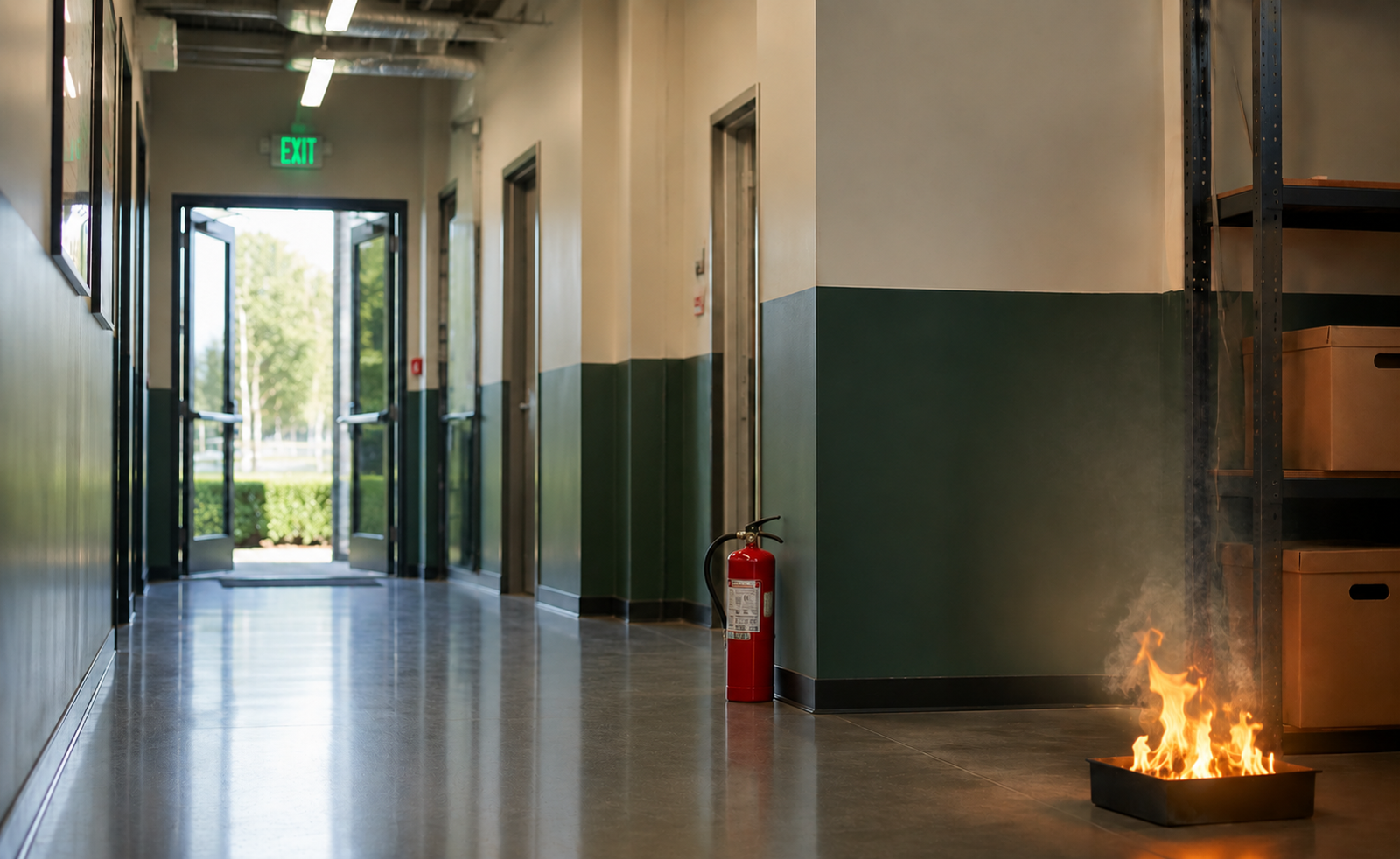
Can I safely control this fire without putting myself between the fire and my exit?
If the answer is uncertain, evacuation is the safer choice.
When It May Be Appropriate to Use a Fire Extinguisher
You should consider using a portable fire extinguisher only when several safety conditions are met.
1. The Fire Is Small and Contained
The fire should still be limited to the material or object where it started.
Examples may include:
- A small wastebasket fire
- A minor cooking-related fire with the proper extinguisher available
- A small piece of equipment beginning to burn
- A small contained fire that has not spread to nearby materials
If flames are spreading rapidly or reaching surrounding walls, furniture, ceilings, or other combustible materials, evacuate.
2. You Have a Clear Escape Route
Never allow a fire to get between you and your exit.
Before operating an extinguisher, position yourself so that a clear evacuation route remains behind you. Smoke, flames, or heat should not be blocking that path.
If conditions change while you are using the extinguisher, leave immediately rather than continuing to fight the fire.
3. The Correct Extinguisher Is Available
Different extinguishers are designed for different classes of fire Using the wrong extinguisher may be ineffective and, in certain situations, can make the hazard worse Employees and building occupants who are expected or authorized to operate extinguishers should understand what equipment is available and the types of hazards it is intended to address.
Proper extinguisher selection and placement are therefore important parts of a commercial fire protection program.
4. You Know How to Operate the Extinguisher
A fire emergency is not the ideal time to read operating instructions for the first time.
OSHA requires employers that provide extinguishers for employee use to educate employees about fire extinguisher operation and the hazards involved in fighting developing fires.
A common method for remembering how to operate an extinguisher is PASS:
P – Pull the pin.
A – Aim the nozzle at the base of the fire.
S – Squeeze the handle.
S – Sweep from side to side at the base of the flames.
Continue watching the area carefully because an extinguished fire may reignite.
5. Someone Has Alerted Emergency Services
Trying to extinguish a small fire should never replace the emergency response process.
Sound the building alarm when applicable, notify others, and contact emergency services.
Even when an extinguisher appears to put the fire out completely, professional evaluation may still be necessary because hidden heat or smoldering materials can cause the fire to restart.
When You Should Evacuate Immediately
There are situations where attempting to use an extinguisher is simply too dangerous.
The Fire Is Growing Rapidly
If flames are spreading beyond the original object or area, leave.
Portable extinguishers are not designed to control a major structural fire.
Smoke Is Filling the Area
Smoke is one of the greatest dangers during a fire.
If smoke is reducing visibility, making breathing difficult, or accumulating rapidly, evacuation should take priority.
OSHA specifically advises against attempting to fight fires where smoke and combustion products create an atmosphere that would require respiratory protection.
You Can Feel Significant Heat
Intense radiant heat is another warning that conditions are becoming unsafe.
If you cannot approach the fire comfortably within the effective range of the extinguisher, do not move closer.
Evacuate instead.
Your Exit Could Be Blocked
Always protect your escape route. If flames, smoke, or heat could move between you and the exit, leave immediately. Never enter deeper into a room to reach a fire.
The Extinguisher Does Not Put the Fire Out
If you discharge an extinguisher and the fire continues to burn or begins growing again, evacuate.
Do not remain inside trying multiple approaches while conditions continue deteriorating.
According to federal fire-safety guidance, if one extinguisher does not control the fire, occupants should back away and get outside.
Workplace Policies Matter
For businesses, employees should also understand their organization’s Emergency Action Plan.
Not every employee is automatically expected to fight a fire.
Some workplaces require everyone to evacuate immediately. Others designate specific trained employees who may use fire extinguishers while everyone else leaves the affected area.
OSHA allows employers to establish different emergency response approaches, but employees must understand which policy applies to their workplace.
If employees are expected to use portable extinguishers, appropriate education and training are essential.
Preparation Starts Before the Fire
Fire safety decisions become much easier when equipment and procedures are already in place.
Commercial properties should make sure extinguishers are:
- Properly selected for the hazards present
- Correctly mounted and located
- Easy to access
- Properly charged
- Free from visible damage
- Regularly inspected
- Professionally serviced when required
- Clearly documented for compliance purposes
Grace Under Fire provides commercial fire extinguisher inspection, installation, service, replacement, documentation, and education across North Texas.
Regular inspection and maintenance help ensure that when an extinguisher is actually needed, it is ready to perform.
The Safest Decision Is Sometimes to Leave
Having a fire extinguisher nearby does not mean every fire should be fought. An extinguisher is a tool for controlling certain small, early-stage fires—not a substitute for professional firefighters. If the fire is spreading, smoke is increasing, heat is intense, you are unsure how to operate the extinguisher, or your escape route is threatened, evacuate immediately and call 911 from a safe location.
The goal of fire safety is not to save equipment at the expense of personal safety. It is to protect people first.
Keep Your Property Prepared
Grace Under Fire helps businesses, property managers, facilities, retail locations, restaurants, warehouses, offices, houses of worship, and other commercial properties across North Texas maintain properly inspected and compliant fire extinguisher systems.
From annual inspections and equipment replacement to documentation and practical fire-safety education, our goal is to help your organization stay prepared before an emergency occurs.
Need your commercial fire extinguishers inspected or serviced?
Contact Grace Under Fire to schedule a commercial fire extinguisher compliance review and make sure your property is prepared when it matters most.
Frequently Asked Questions
1. When should you use a fire extinguisher?
You should use a fire extinguisher only when the fire is small, contained, and still in its early stage. You should also have the correct extinguisher, know how to use it, and maintain a clear escape route behind you.
2. When should you evacuate instead of using a fire extinguisher?
Evacuate immediately if the fire is spreading quickly, producing heavy smoke, generating intense heat, blocking your exit, or cannot be controlled with one extinguisher. Personal safety should always come first.
3. What does PASS mean when using a fire extinguisher?
PASS stands for Pull, Aim, Squeeze, and Sweep. Pull the pin, aim at the base of the fire, squeeze the handle, and sweep the nozzle from side to side.
4. Can employees use fire extinguishers at work?
Employees may use fire extinguishers if their workplace policy allows it and they have received appropriate education or training. Some businesses require all employees to evacuate immediately, while others designate trained personnel to respond to small fires.
5. How often should commercial fire extinguishers be inspected?
Commercial fire extinguishers should be visually checked regularly and professionally inspected and maintained according to applicable fire codes and standards. Businesses should also keep inspection and service records to support compliance and ensure equipment is ready for use.